Pregnancy brings many physical changes, and some discomforts are common. However, certain symptoms may indicate a serious problem affecting the mother or baby. Recognising pregnancy warning signs and seeking timely medical assessment can help protect both. Getting checked does not necessarily mean something is wrong, but delaying care when symptoms are serious can be dangerous.
Which Pregnancy Warning Signs Need Immediate Medical Attention?
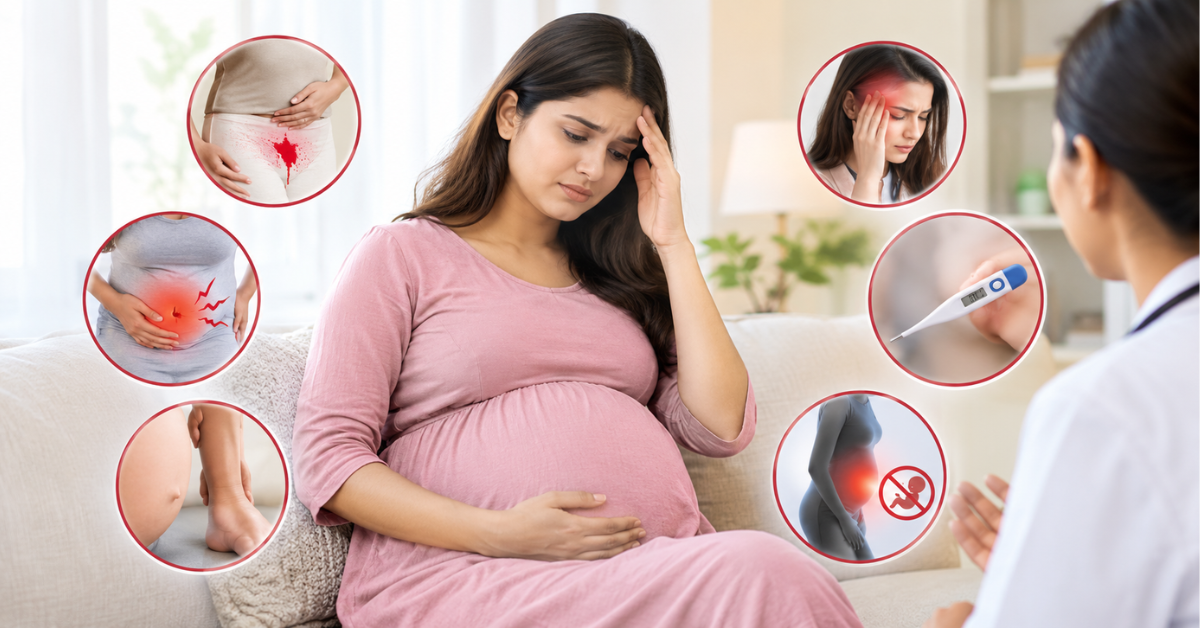
Contact your obstetrician or seek urgent medical care if you experience any of the following symptoms:
- Heavy vaginal bleeding: Heavy bleeding, particularly with severe pain, requires emergency evaluation.
- Severe abdominal pain: Persistent, worsening, or intense abdominal pain should never be ignored.
- Severe headache or vision changes: A persistent headache, blurred vision, or sudden visual disturbances may signal a serious pregnancy complication.
- Sudden swelling: Unexpected swelling of the face or hands, especially with headache or vision changes, needs urgent assessment.
- Breathing difficulty or chest pain: These symptoms require immediate medical attention, particularly if severe or sudden.
- Fainting or seizures: Seek emergency care immediately.
- Fever with severe illness: Fever accompanied by significant weakness or feeling extremely unwell requires prompt assessment.
- Fluid leaking from the vagina: This may indicate that the waters have broken before labour is expected.
- Reduced fetal movements: A noticeable reduction or absence of your baby’s usual movements after a regular pattern develops requires prompt maternity assessment.
- Persistent vomiting: Inability to keep fluids down can lead to dehydration and needs medical attention.
Which Symptoms May Require Immediate Emergency Care?
Heavy bleeding, seizures, chest pain, severe breathing difficulty, fainting, and severe persistent abdominal pain warrant emergency medical evaluation. Do not wait for a routine appointment or assume these symptoms are caused by normal pregnancy changes.
If you suspect a serious emergency, go to the nearest emergency department or contact local emergency services. Prompt assessment is important even if symptoms fluctuate or temporarily improve.
What Should You Do If You Notice A Warning Sign?
Contact your obstetrician or maternity unit promptly when an unusual or concerning symptom develops. For severe symptoms, seek emergency care without delay. Do not wait at home for symptoms to disappear or try to manage serious warning signs with home remedies.
If possible, note when the symptoms started and any associated changes. Avoid self-medicating unless advised by a qualified healthcare professional. If your baby’s movements decrease noticeably, contact your maternity unit immediately rather than waiting until the next day.
When Should You Contact Your Obstetrician?
Contact your obstetrician whenever a symptom feels unusual, persists, worsens, or causes concern. Regular prenatal appointments are important, but they should never replace urgent assessment when warning signs appear. For personalised guidance and Pregnancy Care and Delivery in Indore, consult a qualified obstetrician who can assess your symptoms and recommend appropriate care for your stage of pregnancy.
FAQs
1. Is vaginal bleeding during pregnancy always an emergency?
Any vaginal bleeding during pregnancy should be reported promptly to your healthcare professional. Heavy bleeding or bleeding accompanied by severe pain requires emergency evaluation.
2. When should I worry about reduced fetal movements?
A noticeable reduction or absence of your baby’s usual movements requires prompt maternity assessment once regular movements have been established. Do not wait until the next day.
3. Can a severe headache during pregnancy be dangerous?
Yes. A severe or persistent headache, particularly with blurred vision or sudden swelling, may indicate a serious complication and needs urgent medical assessment.
4. Is severe abdominal pain normal during pregnancy?
Mild discomfort can occur during pregnancy, but severe, persistent, or worsening abdominal pain needs urgent medical evaluation.
5. When should a pregnant woman go to the hospital immediately?
Seek emergency care for heavy bleeding, seizures, chest pain, serious breathing difficulty, fainting, or severe persistent pain. Do not delay assessment for potentially serious symptoms.