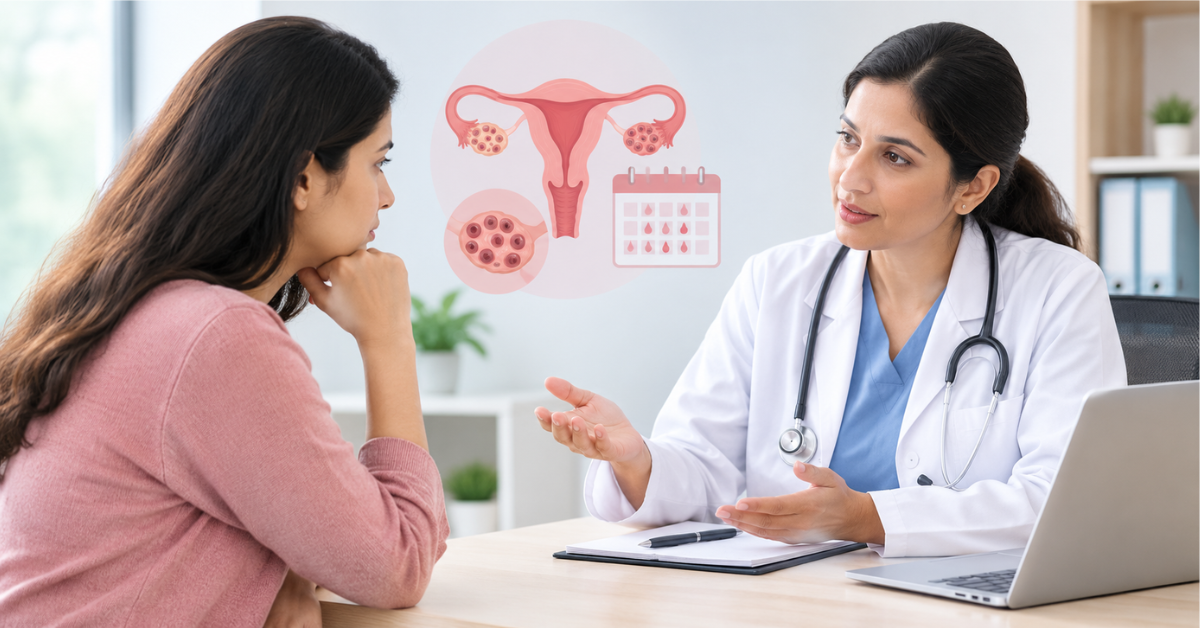
Irregular periods can be confusing and stressful, especially when they happen frequently. One possible cause is Polycystic Ovary Syndrome (PCOS), a hormonal condition that can affect menstrual cycles and reproductive health. Understanding the symptoms and knowing when to seek medical advice can help you take better care of your health.
What Is PCOS And How Does It Affect Periods?
PCOS is a hormonal condition that can affect ovulation, the process in which an ovary releases an egg. When ovulation does not happen regularly, periods may become delayed, infrequent, or missed. Some women may also experience difficulty getting pregnant.
However, irregular periods do not always mean you have PCOS. Stress, thyroid problems, weight changes, and other hormonal conditions can also affect menstrual cycles.
Common Symptoms Of PCOS
Along with irregular periods, PCOS may cause several other symptoms, including:
- Acne and oily skin: Hormonal changes may lead to frequent breakouts.
- Excess facial hair: Hair may grow on the chin, upper lip, or other areas.
- Scalp hair thinning: Some women notice reduced hair volume.
- Weight changes: Weight gain or difficulty managing weight may occur.
- Missed periods: Menstrual cycles may become unpredictable.
Symptoms vary from woman to woman, and not everyone experiences all of them.
When Should You See A Gynecologist?
Occasional changes in your menstrual cycle may happen, but repeated irregularities should not be ignored. Consider consulting a gynecologist if:
- Your periods are repeatedly irregular or frequently missed.
- You have not had a period for around three months and pregnancy is not the cause.
- Your bleeding is unusually heavy or lasts longer than usual.
- You experience persistent acne, excess facial hair, or unexplained hair thinning.
- You are trying to conceive but have irregular periods.
Seek urgent medical care if heavy bleeding causes dizziness, fainting, or severe weakness, or if you experience severe pelvic pain.
How Is PCOS Evaluated And Managed?
A gynecologist may review your menstrual history, symptoms, and medical background. Depending on your needs, evaluation may include a physical examination, blood tests to assess hormones and related health concerns, and an ultrasound when appropriate. PCOS is not diagnosed through ultrasound alone.
Management depends on your symptoms and health goals. It may include balanced nutrition, regular physical activity, adequate sleep, and medicines to help regulate periods or manage specific symptoms. Regular menstrual monitoring also helps identify changes that need attention.
Seeking PCOD / PCOS Management in Indore can help you understand your symptoms and discuss a suitable care plan with a gynecologist. Early evaluation can help manage symptoms, support menstrual health, and address future reproductive health concerns.
FAQs
1. Can PCOS cause irregular or missed periods?
Yes. PCOS can affect ovulation, making periods irregular, delayed, or absent. Other possible causes should also be considered.
2. How long can a period be delayed with PCOS?
There is no fixed delay. Some women have long cycles, while others miss periods for months. Consult a gynecologist if your period is absent for around three months.
3. When should I see a gynecologist for irregular periods?
Seek advice if irregular periods happen repeatedly, you miss periods for several months, or you experience unusually heavy bleeding or persistent hormonal symptoms.
4. Can PCOS be managed with lifestyle changes?
Lifestyle changes can support overall health and symptom management. Some women may also need medical treatment based on their symptoms and goals.
5. Does every woman with irregular periods have PCOS?
No. Stress, thyroid conditions, pregnancy, and other hormonal changes can affect periods. A medical evaluation can help identify the cause.