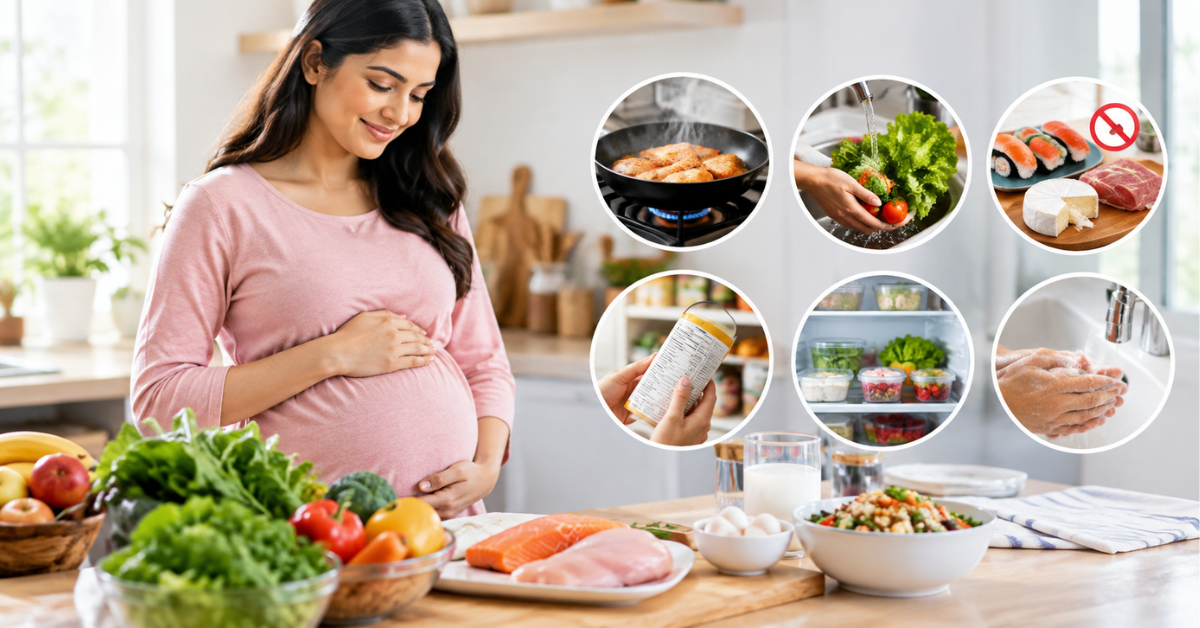
Eating a balanced diet during pregnancy supports your health and your baby’s development. However, how food is washed, stored, prepared, and cooked is equally important. Following simple food safety habits can reduce the risk of foodborne infections and help you enjoy everyday meals with greater confidence.
How Should You Wash Fruits And Vegetables?
Wash fruits and vegetables thoroughly under clean, running water before cutting, peeling, or eating them. Remove visible dirt and damaged areas, and use a clean knife and chopping board.
Avoid washing produce with soap or household detergents. Keep washed foods separate from raw meat and poultry to prevent cross-contamination. If clean water is unavailable, use a safe drinking-water source.
Which Foods Need Extra Care?
Meat, Eggs, And Seafood
Cook chicken, meat, and seafood thoroughly. Avoid raw or undercooked meat, raw seafood, and uncooked eggs. Choose fully cooked eggs with firm whites and yolks, especially when preparing homemade mayonnaise or desserts.
Fish can provide important nutrients during pregnancy. Choose properly cooked, lower-mercury varieties and follow local medical advice on fish selection.
Milk And Dairy Products
Choose pasteurized milk and dairy products. Avoid unpasteurized milk and products made from it because they may contain harmful bacteria. Keep paneer, cheese, curd, and other perishable dairy foods refrigerated as needed.
Is Street Food Safe During Pregnancy?
Street food is not automatically unsafe, but hygiene matters. Choose freshly prepared, thoroughly cooked food served hot from a clean stall. Avoid items that have been sitting uncovered, raw garnishes washed with unsafe water, and chutneys or drinks made with questionable water or ice.
At home or in restaurants, use clean utensils and separate boards for raw and cooked foods. Wash your hands before preparing meals and after handling raw meat or eggs.
How Should You Store Leftovers?
Refrigerate perishable foods within two hours of cooking, or within one hour when the temperature exceeds 32°C. Store leftovers in covered, shallow containers and refrigerate promptly. Eat refrigerated leftovers within three to four days and reheat them until steaming hot throughout.
Check expiry dates, packaging condition, and storage instructions on ready-to-eat foods. When food smells unusual, looks spoiled, or has been stored unsafely, discard it rather than tasting it.
If you develop vomiting, diarrhoea, fever, severe abdominal pain, or signs of dehydration after eating questionable food, contact your healthcare professional promptly. Seek urgent care for severe symptoms or difficulty keeping fluids down. Discussing food choices and food-related concerns during Pregnancy Care and Delivery in Indore appointments can help you receive guidance suited to your health and nutritional needs.
FAQs
1. Which foods should pregnant women avoid for safety reasons?
Avoid raw or undercooked meat, seafood and eggs, unpasteurized dairy products, and foods handled or stored unsafely. Choose thoroughly cooked meals and pasteurized products.
2. Is it safe to eat street food during pregnancy?
It can be safer to choose freshly cooked, piping-hot food from vendors with good hygiene. Avoid uncovered food and drinks prepared with unsafe water or ice.
3. Can pregnant women eat eggs, fish, and meat?
Yes. Properly cooked eggs, meat, and suitable low-mercury fish can be part of a balanced pregnancy diet. Avoid raw or undercooked versions.
4. How should leftovers be stored and reheated?
Refrigerate perishable leftovers promptly in covered containers. Use them within three to four days and reheat thoroughly until steaming hot.
5. What should I do if I develop vomiting or diarrhoea after eating questionable food?
Contact your healthcare professional, especially if you have fever, severe pain, bloody diarrhoea, or dehydration. Seek urgent care if symptoms are severe or you cannot keep fluids down.