
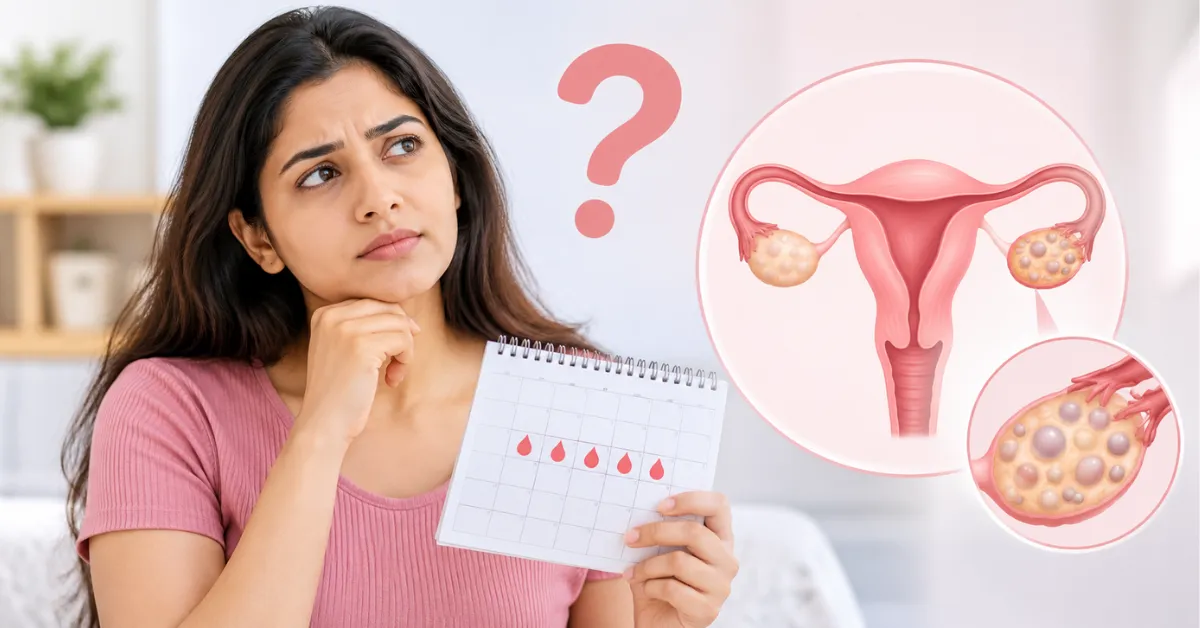
Many women associate Polycystic Ovarian Disease (PCOD) with irregular or missed periods. However, having a regular menstrual cycle does not always mean that a woman is free from PCOD. Some women may experience hormonal changes and other symptoms associated with the condition even when their periods arrive on time.
PCOD can affect women differently, and menstrual irregularities are only one possible sign. Understanding the other symptoms and getting an appropriate medical evaluation can help women manage their reproductive health.
Can You Have PCOD With Regular Periods?
Yes, women can have PCOD even if their menstrual cycles appear regular. Although irregular periods are a common symptom, they are not present in every woman with the condition.
Some women may experience regular bleeding but still have hormonal imbalances or occasional problems with ovulation. Therefore, menstrual regularity alone cannot rule out PCOD.
Common PCOD Symptoms Apart From Irregular Periods
PCOD can cause different symptoms depending on hormonal changes and individual health factors. Some common signs include:
- Acne and oily skin: Increased androgen levels may contribute to persistent acne, particularly around the chin and jawline.
- Unwanted facial hair: Some women may notice excessive hair growth on the chin, upper lip, chest, or other areas.
- Hair thinning: Hormonal changes can contribute to hair thinning, especially around the scalp’s crown area.
- Weight-related concerns: Some women experience weight gain or difficulty managing their weight. Insulin resistance may also be associated with PCOD.
- Ovulation difficulties: Even with regular periods, some women may experience inconsistent ovulation, which can affect their chances of conception.
Not every woman with PCOD experiences all these symptoms.
Does Having Regular Periods Mean Healthy Ovulation?
Not necessarily. Menstrual bleeding and ovulation are related but different processes. A regular cycle often suggests that ovulation is occurring, but it does not guarantee that every cycle is ovulatory.
Some women may have occasional cycles without ovulation despite experiencing bleeding at predictable intervals. When clinically necessary, a gynecologist may recommend tests to understand whether ovulation is occurring.
How Is PCOD Diagnosed In Women With Regular Periods?
PCOD evaluation involves more than checking menstrual patterns. A gynecologist may consider:
- Medical history: Understanding menstrual patterns, skin changes, hair growth, and fertility concerns.
- Physical examination: Assessing signs such as acne, unwanted hair growth, and other relevant symptoms.
- Blood tests: Checking hormone levels and evaluating metabolic health when appropriate.
- Ultrasound: Examining the ovaries when clinically indicated.
Ultrasound alone does not confirm PCOD. Diagnosis requires an overall assessment and exclusion of other conditions that may cause similar symptoms.
If you notice persistent hormonal symptoms, unexplained hair growth, acne, or difficulty conceiving, consulting a gynecologist can help identify the underlying cause. Seeking guidance from a qualified pcod specialist in indore can help you understand your symptoms, receive an appropriate evaluation, and discuss suitable management options based on your health needs.
FAQs
1. Can I have PCOD if my periods are regular?
Yes. Some women with PCOD experience regular menstrual cycles but have other symptoms, such as acne, unwanted facial hair, or hormonal imbalances.
2. What are the common symptoms of PCOD apart from irregular periods?
Common symptoms include persistent acne, excessive facial hair, scalp hair thinning, weight-related concerns, and difficulties with ovulation.
3. Can women with PCOD ovulate regularly?
Yes. Some women with PCOD ovulate regularly, while others experience occasional or frequent ovulation problems.
4. Can PCOD affect fertility even with regular menstrual cycles?
Yes. Regular periods do not always guarantee consistent ovulation. However, many women with PCOD can conceive, depending on their individual reproductive health.
5. How is PCOD diagnosed in women with regular periods?
Diagnosis may involve medical history, physical examination, blood tests, and ultrasound when appropriate. A gynecologist evaluates these findings together rather than relying on one symptom or test.