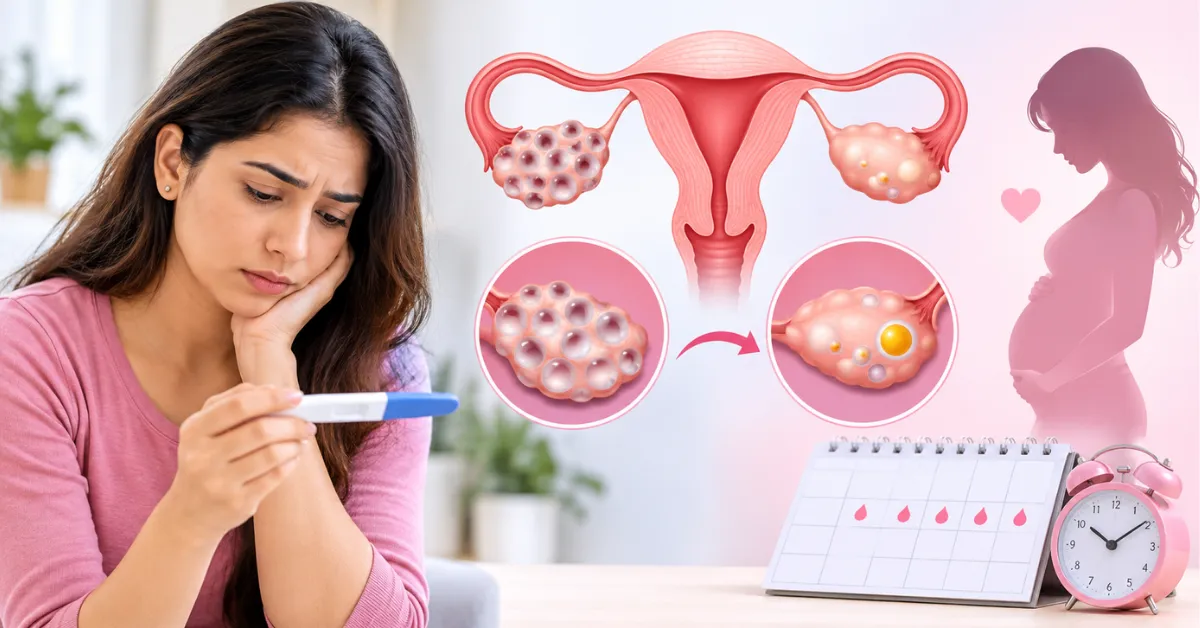
Polycystic Ovarian Disease (PCOD) is a common hormonal condition that can affect a woman’s menstrual cycle and reproductive health. One of its major effects is irregular ovulation, which may influence the chances of getting pregnant. However, having PCOD does not mean a woman cannot conceive. Understanding how the condition affects ovulation can help women make informed decisions about their reproductive health and seek appropriate medical guidance.
What Is PCOD And How Does It Affect Hormones?
PCOD is a condition in which hormonal changes can affect the normal functioning of the ovaries. Women with PCOD may experience irregular periods, acne, unwanted facial hair, or changes in weight.
Hormonal imbalance can interfere with the normal development and release of eggs from the ovaries. As a result, ovulation may become irregular or may not occur during some menstrual cycles.
How Does PCOD Affect The Ovulation Process?
Irregular Egg Release
During a typical menstrual cycle, an ovary releases a mature egg through a process called ovulation. In women with PCOD, hormonal changes may prevent the egg from developing fully or being released regularly.
This can result in longer menstrual cycles, unpredictable periods, or missed periods. When ovulation happens less frequently, the number of opportunities for conception may also decrease.
Hormonal Imbalance And Fertility
Higher levels of certain hormones, including androgens, can interfere with normal ovarian activity. Insulin resistance may also contribute to hormonal changes in some women with PCOD. These factors can affect egg development and make ovulation less predictable.
Common Signs Of Ovulation Problems In PCOD
Women experiencing ovulation irregularities may notice:
- Periods that occur irregularly or after long gaps.
- Missed menstrual cycles.
- Difficulty predicting fertile days.
- Unusually long menstrual cycles.
- Difficulty conceiving despite regular attempts.
These signs do not confirm an ovulation problem on their own. Medical evaluation can help identify the underlying cause.
Can Women With PCOD Get Pregnant Naturally?
Yes, many women with PCOD can conceive naturally. Some women continue to ovulate regularly, while others may experience occasional ovulation. The chances of pregnancy depend on factors such as ovulation patterns, age, overall reproductive health, and the health of the partner.
Lifestyle changes, including balanced nutrition, regular physical activity, adequate sleep, and maintaining a healthy weight, may support hormonal health. Depending on individual needs, a gynaecologist may recommend hormonal assessment, ovulation monitoring, or medically supervised treatments to support egg release.
Women experiencing irregular periods or difficulty conceiving should consider an appropriate fertility evaluation rather than assuming PCOD is the only cause.
Consulting a qualified pcod specialist in indore can help women understand their hormonal health, assess ovulation patterns, and explore suitable fertility management options based on their individual condition.
FAQs
1. Does PCOD always cause irregular ovulation?
No. Some women with PCOD ovulate regularly, while others may experience irregular or absent ovulation. The pattern varies between individuals.
2. Can PCOD cause difficulty in getting pregnant?
PCOD can make conception more difficult when ovulation is irregular. However, many women with this condition conceive naturally or with appropriate medical support.
3. Can regular periods indicate normal ovulation in PCOD?
Regular periods can be a reassuring sign, but they do not always confirm ovulation. A healthcare professional can suggest appropriate tests if needed.
4. Can lifestyle changes improve ovulation in women with PCOD?
Balanced meals, regular exercise, sufficient sleep, and healthy weight management may support metabolic and hormonal health and improve ovulation in some women.
5. When should a woman with PCOD consult a gynaecologist?
Women with very irregular periods, missed cycles, or difficulty conceiving should seek medical advice. Early evaluation can help identify suitable management options.