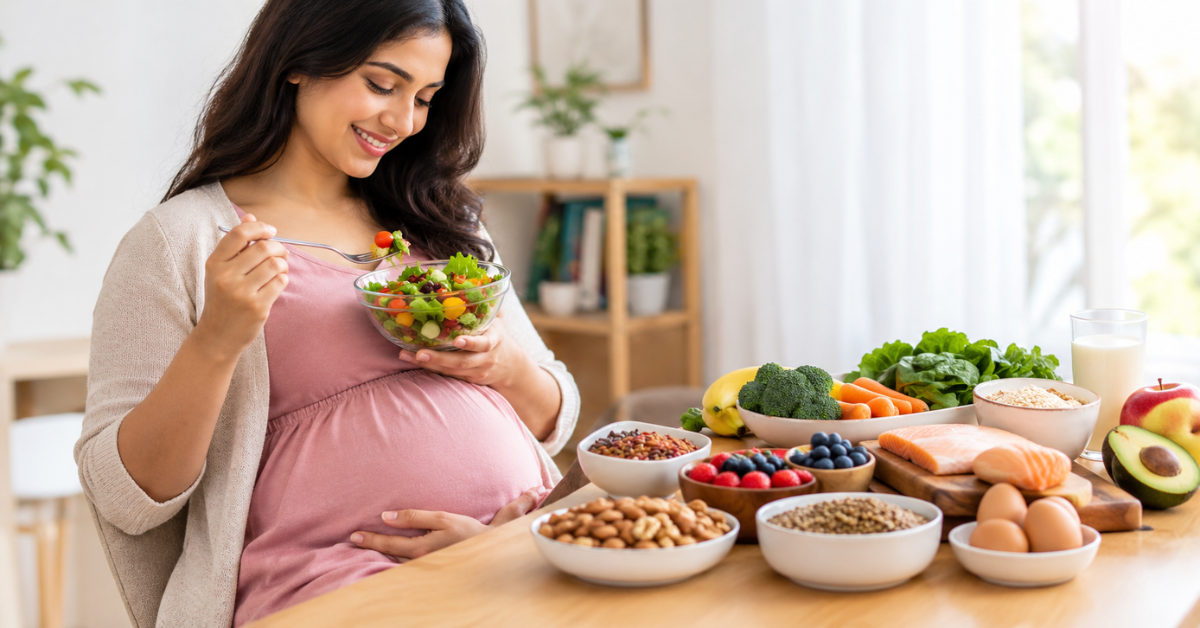
It is an important time for expectant mothers to eat healthy. A good diet provides the essential nutrients needed for the health of the mother and the growth and development of the baby. Eating healthy foods, drinking enough water and following medical advice can help support a healthy pregnancy.
Basic Nutrients For Pregnancy
During pregnancy, your body requires a number of essential nutrients:
- Protein: Helps the baby to grow. Include pulses, beans, lentils, eggs, dairy products and well-cooked lean meat.
- Iron: Helps make red blood cells and carry oxygen. Eat leafy greens, lentils, beans and cereals fortified with iron.
- Folate: Helps the brain and spinal cord develop early on. Add green vegetables, citrus fruits and fortified grains.
- Calcium and Vitamin D: Help build strong bones and teeth. Include fortified milk, curd, paneer and other suitable foods.
- Healthy Fats: Good fats help develop the baby’s brain. Include nuts, seeds and good sources of omega-3 fats, such as low-mercury fish.
Your doctor may recommend supplements depending on your individual nutritional needs.
Food To Eat Every Day For Good Health
Try to eat a variety of nutritious foods rather than just one or two.
- Fruits and Vegetables: Provide essential vitamins, minerals and fiber.
- Whole Grains: Choose oats, whole-wheat roti, brown rice and other whole grains.
- Pulses and Protein Foods: Include dal, chickpeas, beans, eggs and well-cooked meat.
- Dairy Products: Milk, curd and pasteurized paneer provide calcium and protein.
- Nuts and Seeds: Add a small amount of almonds, walnuts or seeds for healthy fats.
Have balanced meals at regular intervals and drink enough water throughout the day. Avoid unnecessary dieting, as your energy requirements change during pregnancy.
Foods And Drinks To Limit Or Avoid
Do not drink any alcohol during pregnancy. Unless your doctor advises otherwise, limit caffeine to no more than 200 mg per day. Avoid raw or undercooked meat, eggs and seafood, unpasteurized milk products, and high-mercury fish. Wash fruits and vegetables thoroughly and follow safe food-handling practices to reduce the risk of foodborne infections.
How To Handle Common Pregnancy Discomforts
For nausea, try eating small, frequent meals and bland foods such as toast or crackers. For constipation, gradually increase fiber intake through fruits, vegetables and whole grains, along with plenty of water. If you experience heartburn, eat smaller meals, avoid personal trigger foods and stay upright after eating.
Customized Nutrition For A Healthy Pregnancy
Every pregnancy is different. Your nutritional needs may depend on your stage of pregnancy, risk of anemia, blood sugar levels and other medical conditions. Before taking supplements or making major dietary changes, consult your healthcare provider. If you are looking for normal delivery in indore, discuss your nutrition, physical activity and birth preferences with your obstetrician as part of your personalized pregnancy care.
FAQs
1. Best Foods to Eat During Pregnancy?
Be sure to eat a well-rounded diet, including fruits, vegetables, whole grains, legumes, dairy products, nuts, and safe sources of protein.
2. How much water should I drink when pregnant?
Drink water all the time. Your needs may rise with heat, activity or certain medical conditions.
3. Is it safe to eat eggs while pregnant?
Yes. Eggs are a good source of protein when cooked until both the white and the yolk are firm.
4. Should I take vitamins when pregnant?
Your doctor may recommend that you take folic acid, iron, vitamin D or other supplements if needed.
5. Can a normal delivery be ensured by proper diet?
Good nutrition is important for maternal and fetus health but the mode of delivery depends on various medical and pregnancy related factors.